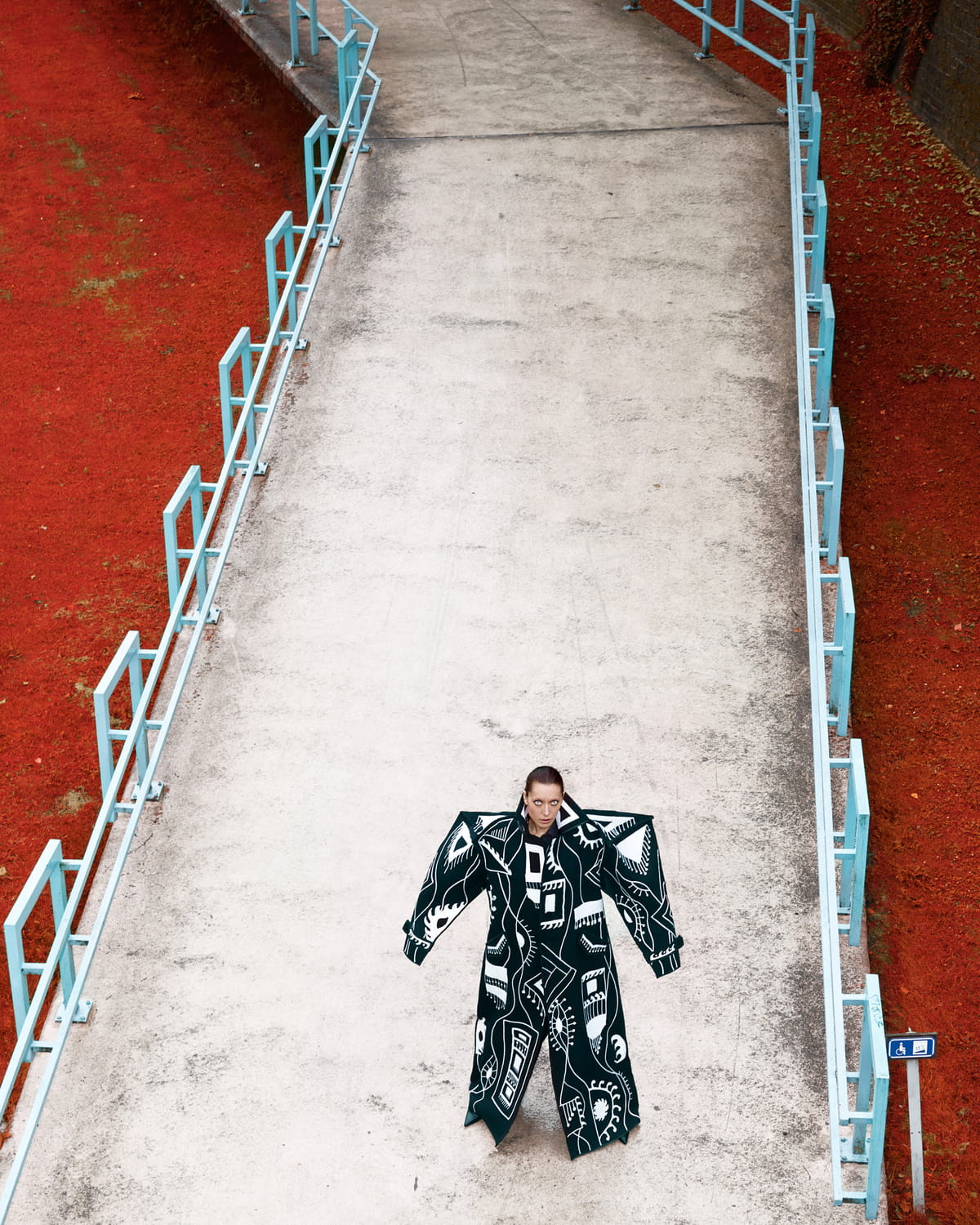
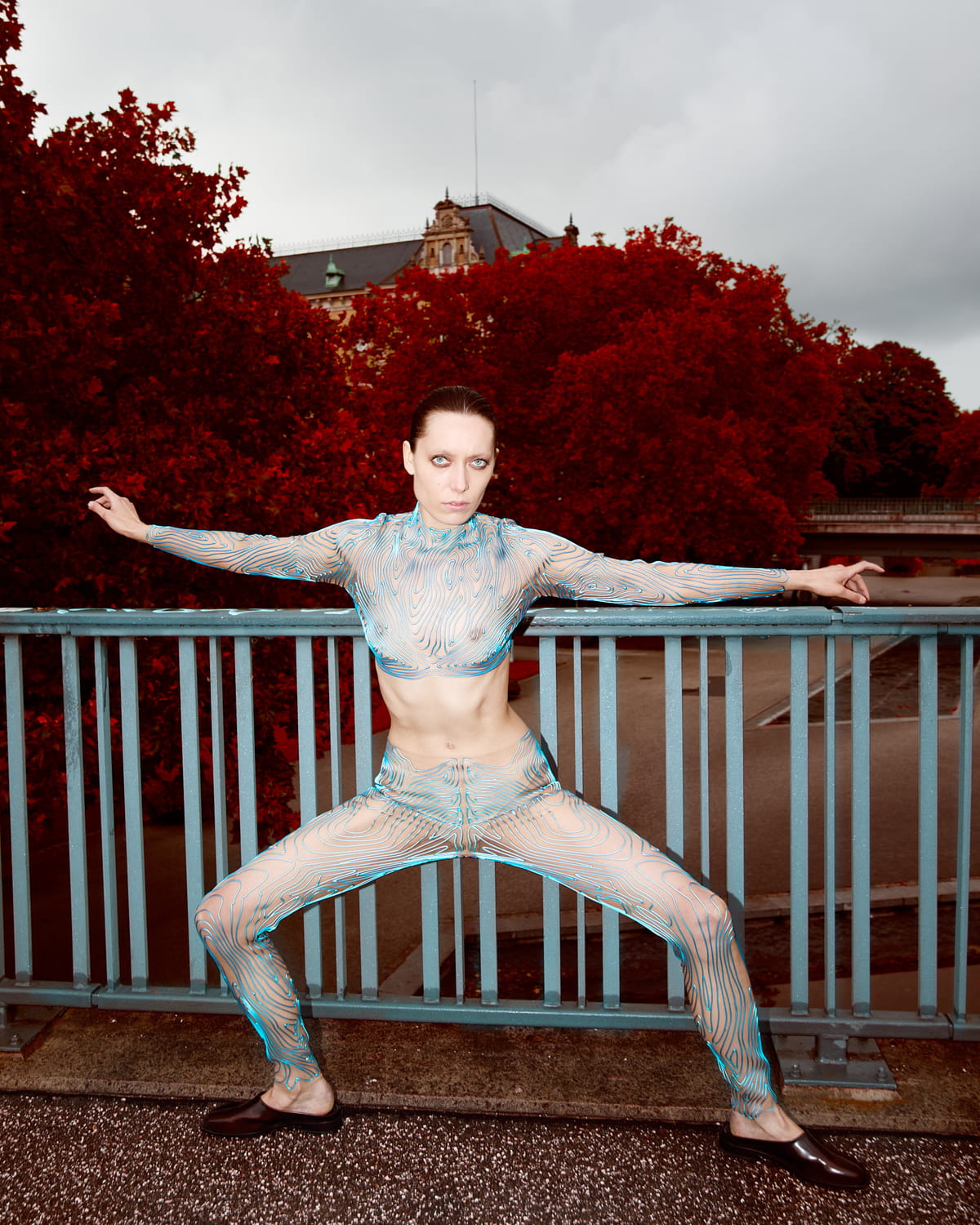
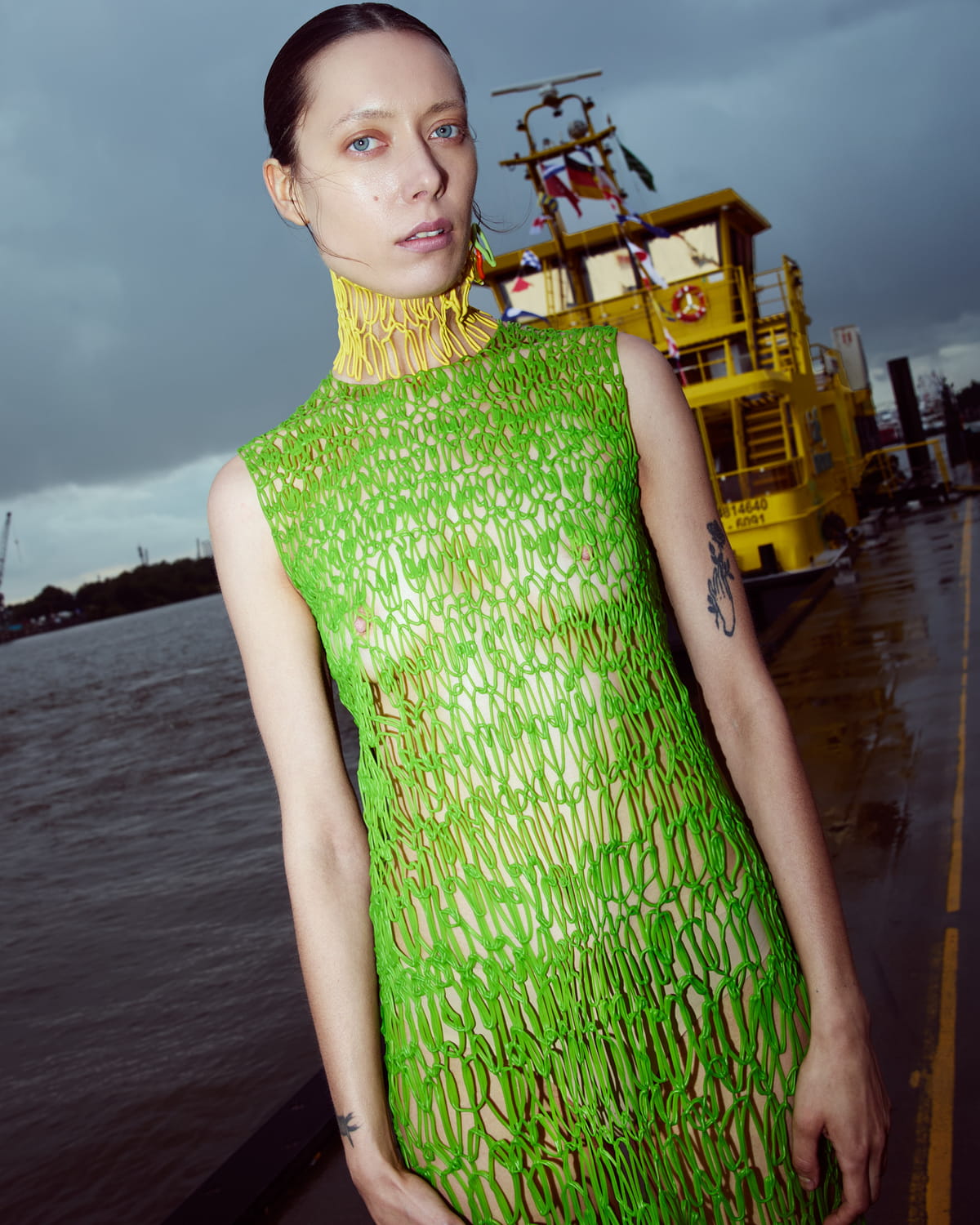
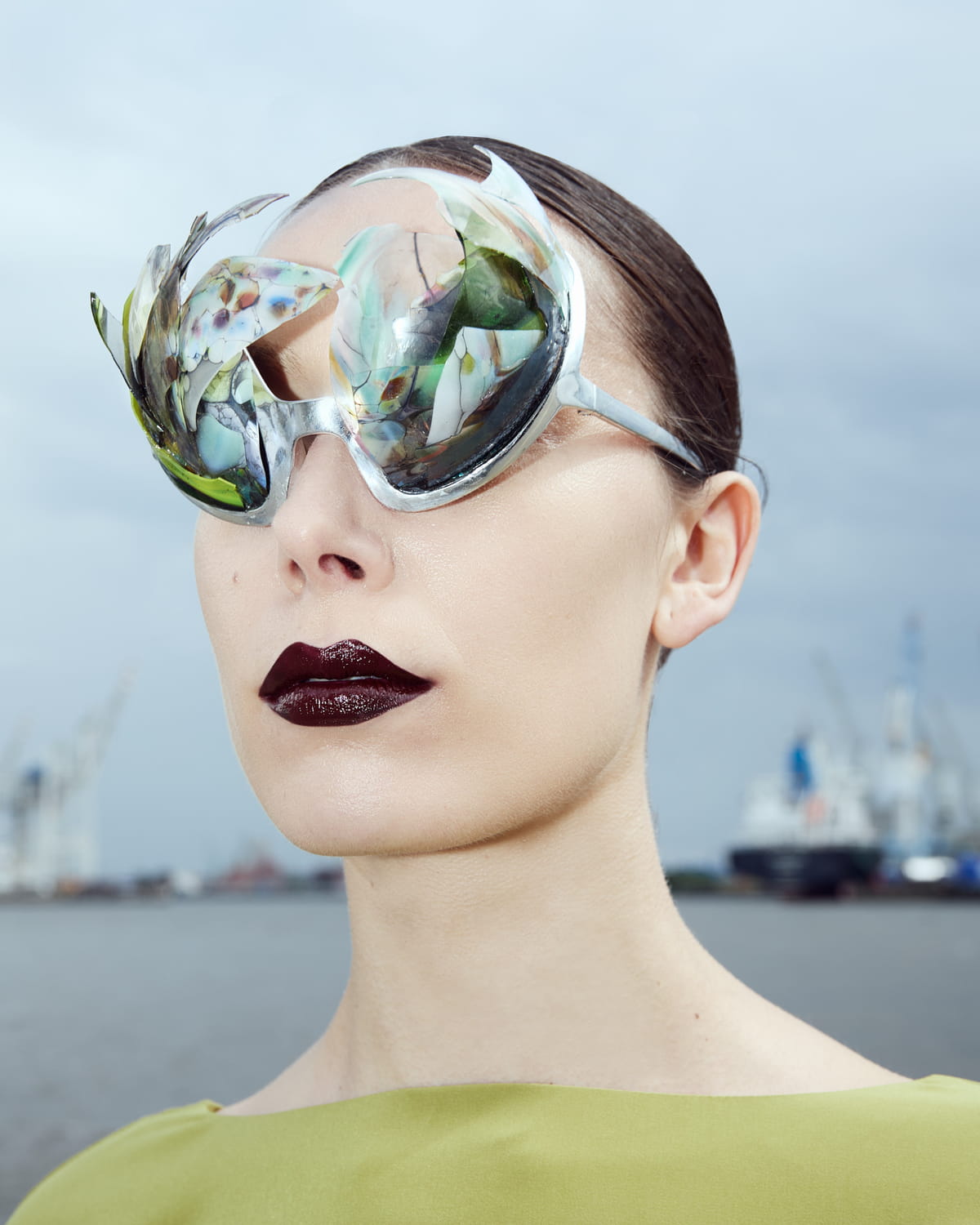
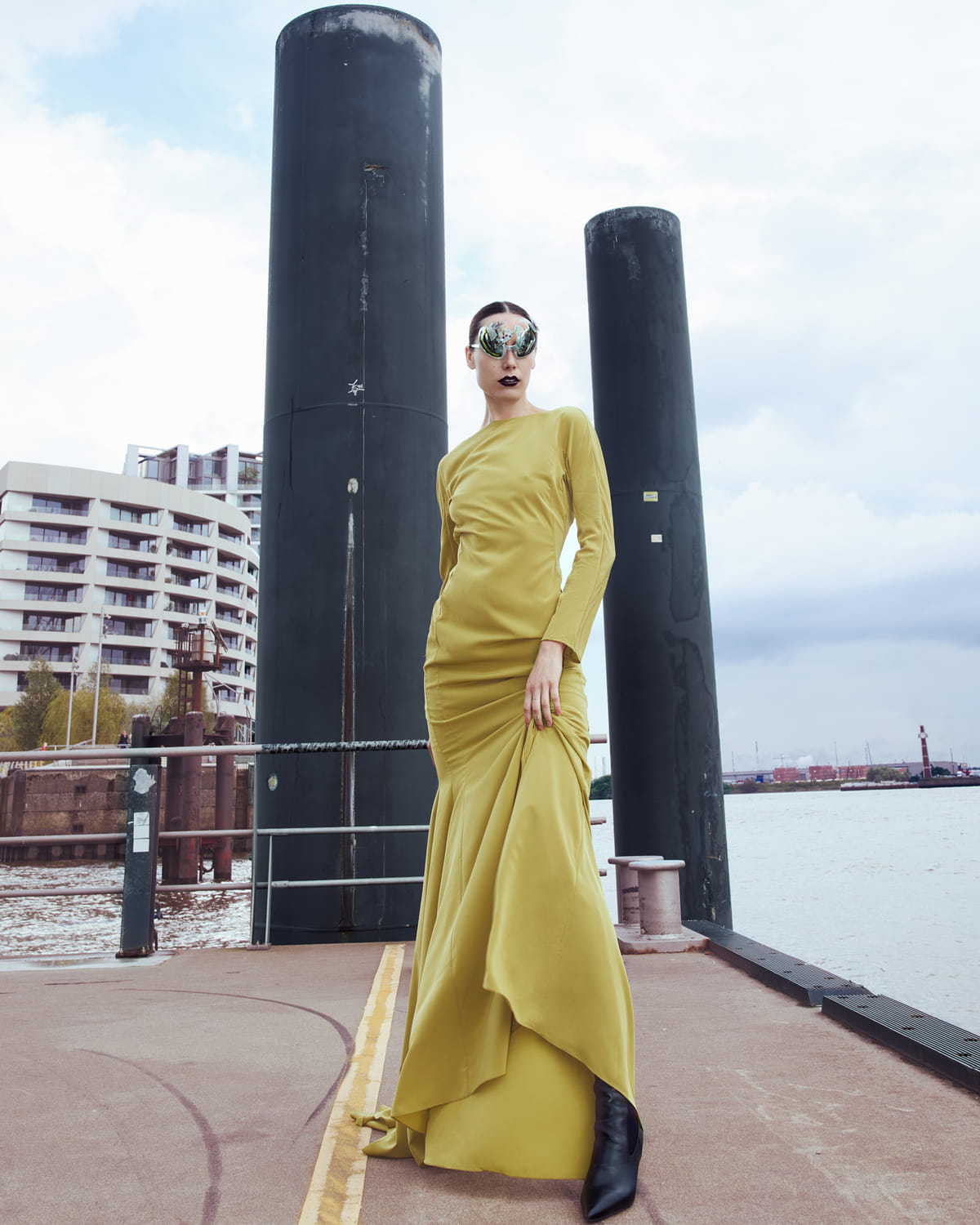
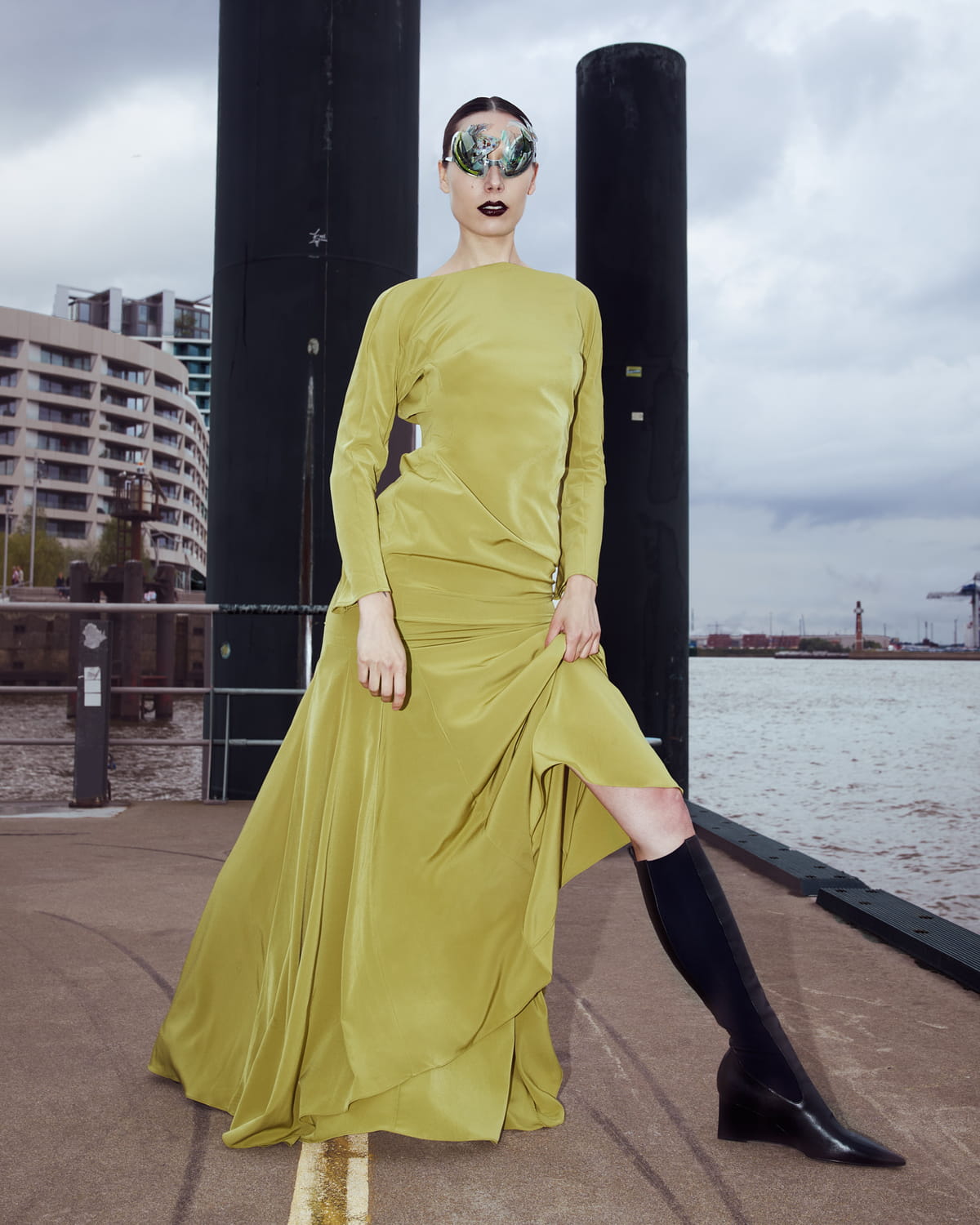
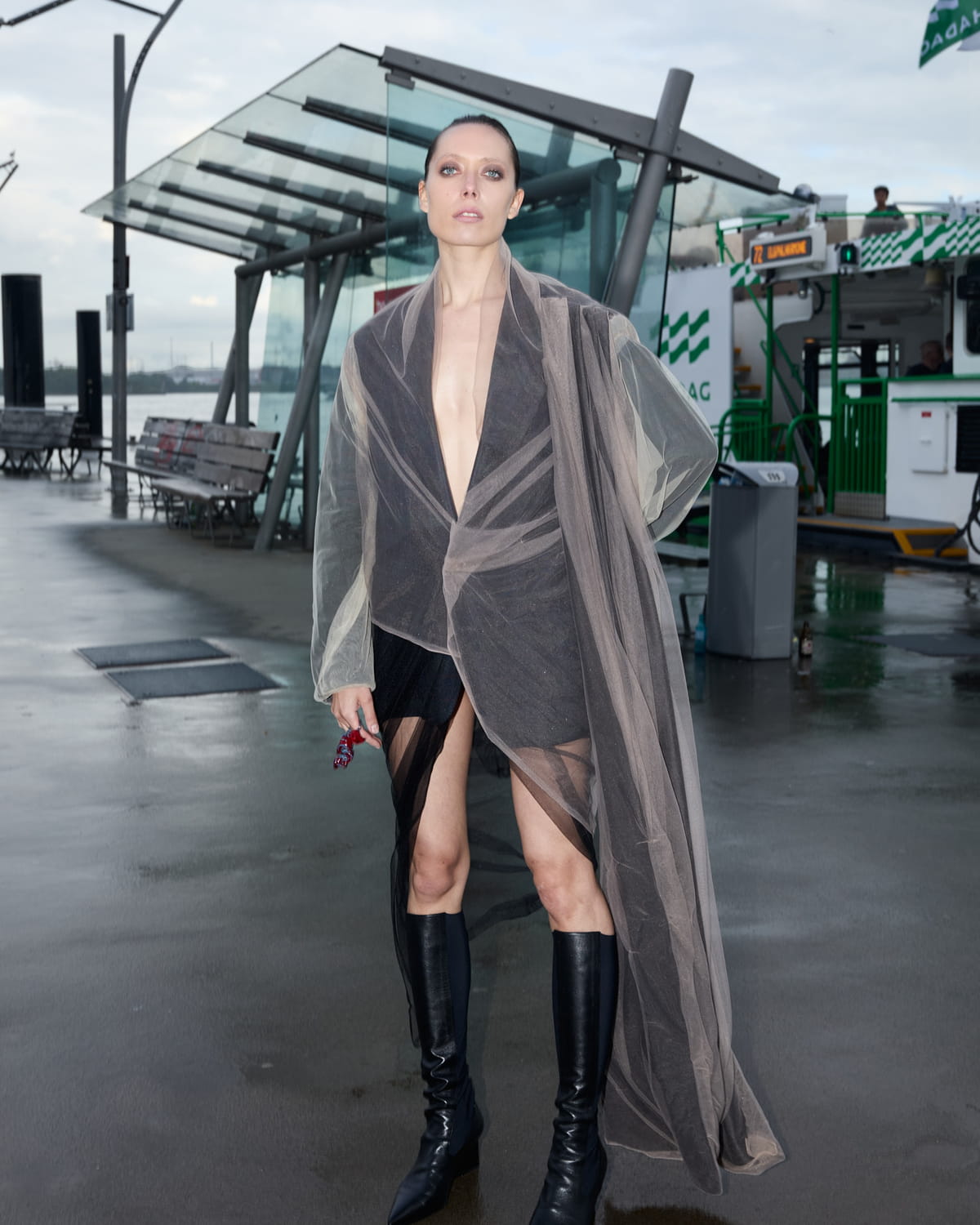
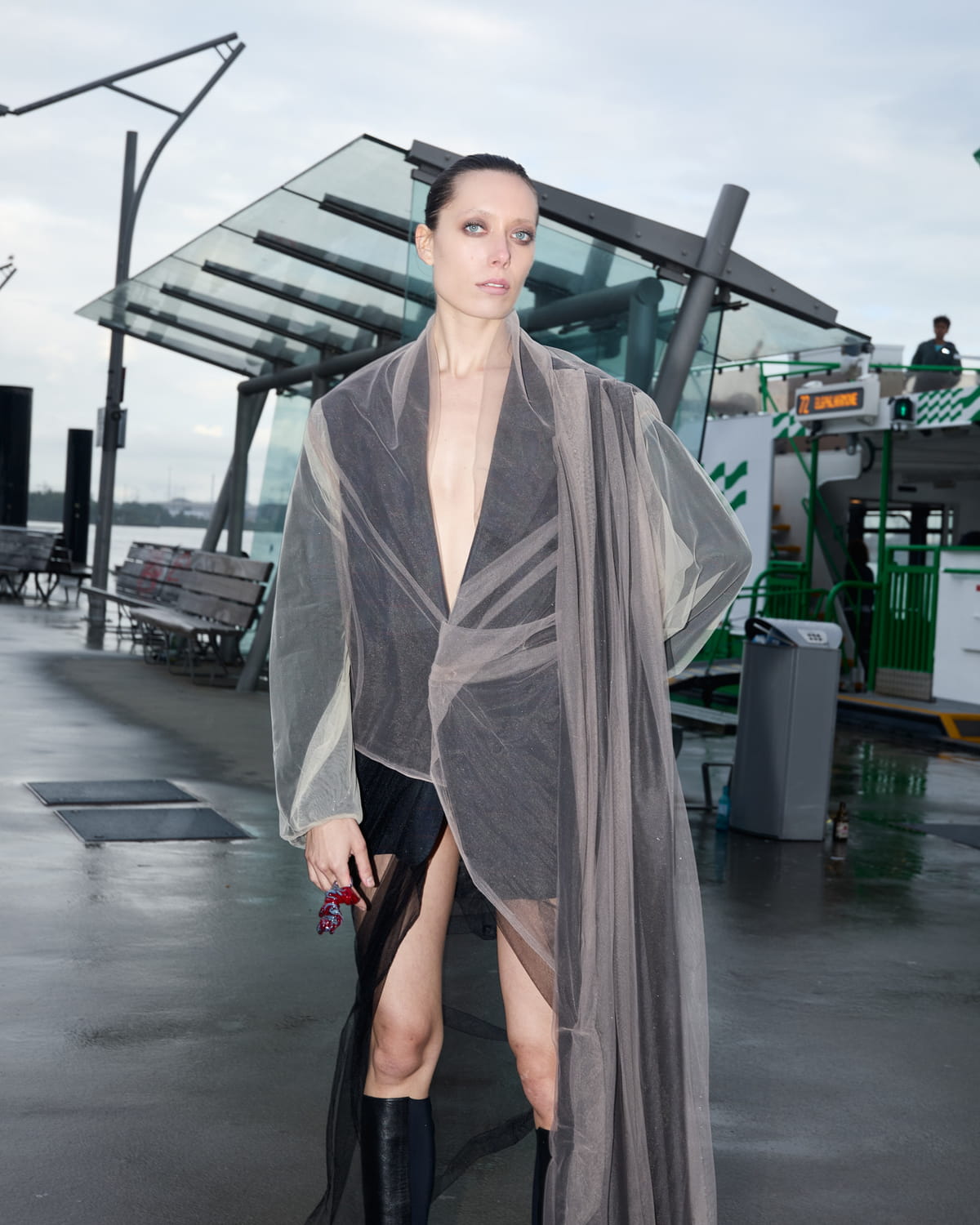
A woman who absorbs her surroundings and redefines them through presence, color, and stillness. She stands between reflection and resistance. In a landscape of iron, glass, and cold water, she becomes the element that cannot be contained. Her presence vibrates against the quiet weight of industry, cuts through the industrial silence like a pulse, like heat, something untamed. Every movement carries control, yet nothing feels cold. There is emotion beneath the surface, restrained, deliberate, like electricity held inside metal. Color becomes her pulse: the acid green hums with renewal, the red burns with defiance, the pale blue cools like breath against steel. She is not adapting; she is rewriting the code. In her stillness, there is power. In her control, defiance. These are not just tones, they are feelings translated into light. The city tries to contain her, but she doesnʼt adapt. She expands. She rewrites the architecture through her own geometry: her posture, her gaze, her stillness.
Here, vulnerability is not weakness. Itʼs voltage. Itʼs what gives the image power. This is not about survival, itʼs about transformation.
A story of a woman who doesnʼt disappear into her environment, but instead redefines it. She is both structure and soul, both color and control, proof that even inside steel, the human still burns.
When Steel Learned to Feel is not about survival: itʼs about conquest. Itʼs the image of a woman who refuses to disappear into the system, who uses structure as armor and beauty as rebellion. This is where emotion becomes steel, and steel learns to feel.